
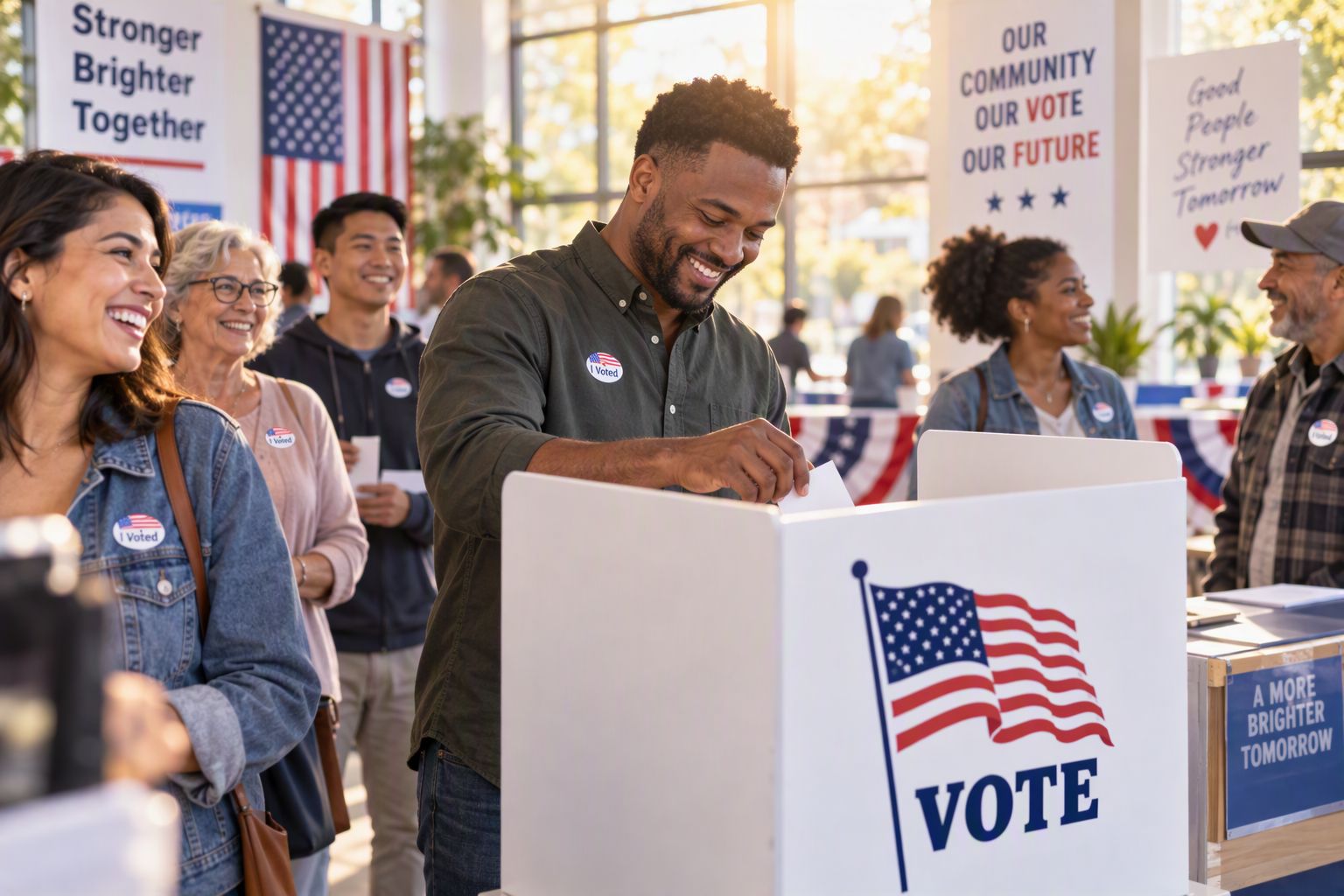
Thomas Paine wrote, “Those who expect to reap the blessings of freedom must, like men, undergo the fatigue of supporting it.” In this country, we are privileged to have the ability to vote for our representative government. We have this privilege because patriots have paid the price with their blood in the past.
George Washington echo’s Paine’s statement when he said, “Experience has taught us that it is much easier to prevent an enemy from posting themselves than it is to dislodge them after they have got possession, and when the freedom of speech is taken away then dumb and silent we may be led, like sheep to the slaughter.”
In the United States, we prevent the bad politicians from taking possession of our God given rights by voting and holding our representatives accountable.
Why don’t we tell people who to vote for in races we cover?
Many times, over the years we have had requests to simplify the voter guides. To change them to simple yes or no questions. We have also had requests to tell people who they should vote for.
The real reason that we created the voter guides the way that we did was that we believe that voters are responsible for their votes. We believe that voters should vote based on their own conscience, not because someone else told them who to vote for.
Candidate Endorsement
This was the first year that we endorsed a candidate. We endorsed Brad Little for Governor to correct the lies that were being told about him. Brad Little has a stellar record, one that would be approved of in any state. He was also in a race that we did not cover. Those were the reasons behind the endorsement.
Patriots vote for their Worldview
Thomas Jefferson wrote, “A true patriot will defend his country from its government.” Patriots get out and vote. They vote based on their worldview. However, without having some idea of a candidate’s worldview voters have no real way to vote their values.
Our voter guides are designed to help voters understand a candidate’s worldview.
Why Worldview Matters More Than Single-Issue Politics
There is no way that any voter guide could possibly ask a candidate all of the questions on all possible issues that might come up during their time in office. This is why we consistently include in the questions we ask questions that are designed to reveal the candidate’s worldview. If we have clarity on a candidate’s worldview, then we have a much better understanding of how a candidate will vote on issues that aren’t in the voter guide.
A candidate whose strongest belief is in their own personal power is certainly not one we should be electing. Understanding a candidate’s worldview enables voters to hold candidates accountable for how they represent the voters. Without an understanding of a candidate’s worldview, it is much more difficult to hold a candidate accountable because there is no expectation of consistency on values.
Evaluating Candidates with Objectivity, Not Bias
Everyone has a worldview. Worldview is very different from bias. If we were to ban voter guide creation based on worldview, there would be no voter guides. No Atheist group would be able to produce voter guides because they would be considered biased. No Muslim group would be able to produce voter guides because they too would be considered biased.
Here is an example of the difference between worldview and bias. We frequently ask the question, “When do you believe life begins and how will this belief affect the legislation you will support?” We ask this question because we are looking to understand a candidate’s worldview on the issue of life. Their answer tells us how they will legislate on several different issues. A biased version of this question would be, “Since life begins at conception, what legislation will you support on this issue?” The biased version assumes an answer as part of the question. It also only tells you about this one issue.
The Duty of the Ballot: Navigating Imperfect Choices
True patriotism involves defending the country through active civic participation. Your vote is your values in action. It is how you ensure that the government that is supposed to represent you actually does. Even if there are races on the ballot that you don’t like either candidate, you should still vote. Simply leave that race blank. If there are races that you know nothing about because no candidate will respond, simply leave that race blank. There are usually good candidates on the ballot who will represent your values. Vote for them. Even if there is only one issue on the ballot that you can vote on, get out and vote. If we refuse to vote on any race, we are abandoning our patriotic duty. We are holding the lives of those who gave their life so that we can vote as cheap.
Franklin Delano Roosevelt said this during a radio address broadcast from the White House on October 5th, 1944, “Nobody will ever deprive the American people of the right to vote except the American people themselves and the only way they could do this is by not voting.”
Vote!